
Description
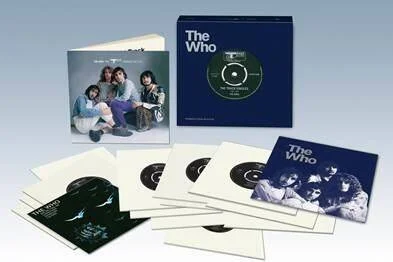
USM are proud to announce Volume 3: The Track Records Singles 1967-1973, which is the third volume of four limited edition 7 vinyl Singles box sets from The Who this year, in celebration of their 50th Anniversary
o Volume 3: The Track Records Singles 1967-1973, will follow on from both the April release of Volume 1: The Brunswick Singles 1965-1966, and the August release of Volume 2: The Reaction Singles 1966. The eventual entire series will comprise a four part set of classic singles spanning all labels The Who released though (Brunswick, Reaction, Track and Polydor), released to coincide with the bands 50th anniversary
o Volume 3: The Track Records Singles 1967-1973 contains fifteen 7 singles from the bands Tracks Records era all pressed on audiophile heavyweight vinyl with paper sleeves (reproducing the period graphics front and back with die-cut centre holes)
o Includes classic hits Pictures of Lily, I Can See For Miles, Magic Bus, Pinball Wizard, Wont Get Fooled Again and Join Together, as well as a collection of rare b-sides
o Housed in a full colour rigid outer box, with a 7 sized 20-page colour booklet with liner notes about each release and period memorabilia
Pictures Of Lily was The Whos first release on Track Records, established earlier in the year by their managers Kit Lambert and Chris Stamp. Unlike many subsequent labels set up essentially as vanity projects by artists or their management, Track was a genuine independent label in search of fresh talent and its first signing, The Jimi Hendrix Experience, signalled their intention to seek out innovative new artists. Indeed, Hendrix recorded Tracks first hit, Purple Haze, which reached the UK charts in March 1967, beating The Who by one month.
The Last Time and Under My Thumb recorded as a gesture of support to Rolling Stones Mick Jagger and Keith Richards who were imprisoned briefly on drugs charges at Chichester Quarter Sessions. The Who released these cover versions of two Stones songs while the trial was in progress, highlighting a cause célèbre of the day that pitched the hedonistic glamour boys of the counter-culture against the stuffy British Establishment.
I Can See For Miles is the link in the chain between The Who as a pop group and The Who as a rock band. Although their earlier singles had shown that the quartet was feistier than just about all the other acts that visited the UK charts before 1967, this was the year when everything changed and, happily for them, The Who found themselves perfectly equipped to join the New World Order. This much was certainly evident on I Can See For Miles, the highlight of their 1967 album The Who Sell Out, and a record now widely regarded as one of their genuine masterpieces. Pete: To me that was the ultimate Who record yet it didnt sell. I spat on the British record buyer.
Pete Townshend has often been cited as the greatest rhythm guitarist in rock, and no better evidence survives than the furious acoustic strumming which underpins Pinball Wizard, the best known song from Tommy and another serious contender for the finest Who song of all time. Recorded towards the end of the Tommy sessions, at Morgan Studios in Willesden, London, on February 7, 1969, Pinball is a rock tour de force, brim-full of ideas, power chords, great lyrics and tight ensemble playing from the opening chord descent to the upward key change near the end.
Overture, from Tommy even rock operas need overtures and like the overtures that preface operas written by Mozart, Verdi and Tchaikovsky this one contains a well arranged mix of instrumental readings of the songs that will follow, most of them linked together by the rumbling, bass-heavy Go To The Mirror riff. The guitar parts are mostly played on Petes acoustic Gibson J200, which sets the mood for the entire work, but Johns French horn adds interesting melodic touches and, as ever, the choral work and drums are quite superb. Indeed, in many respects Keith Moons work on Tommy represents his greatest contribution to The Whos catalogue, the opportunity that enabled him to become an entire orchestra within himself, most notably on the lengthy and breath-taking instrumental track Underture. Nevertheless, the best moment in Overture comes towards the end when an organ arrives to pound out the Listening To You chords from the See Me, Feel Me excerpt. At the close, after a Pinball fanfare, Pete is left strumming alone for the segue into Its A Boy.
Now a cornerstone of The Whos repertoire, Wont Get Fooled Again was the key song on Whos Next, a lengthy call to arms that became the traditional show closer at Who concerts in 1975/76. Recorded on the Rolling Stones 16-track mobile studio at Stargroves, Mick Jaggers Victorian country mansion near Newbury in Berkshire, the song is based around a clattering synthesizer riff that locks the group into a tight, rhythmic performance, classic mid-period Who at their towering best; Roger singing his heart out, Petes block chords firmly in place, John swooping up and down his bass and Keith an almighty presence on drums, albeit slightly more disciplined than usual in view of the songs inflexible structure.
Produced by The Who at The Kitchen, Battersea, June 27, 1973, 5.15 is the best-known song on Quadrophenia, Petes second major rock opera and The Whos sixth original album. Quadrophenia is the story of the journey of a Mod by the name of Jimmy, whose restlessness, frustration and ultimate disillusionment drive him almost to suicide. It takes in many Mod concerns clothes, style, Brighton trips, pills and even a Who concert and ends on a note of triumph when Jimmy somehow manages to free himself from the shackles of the cult. It is now probably best known for the 1979 cult film starring Phil Daniels.

Reviews
There are no reviews yet.