Description
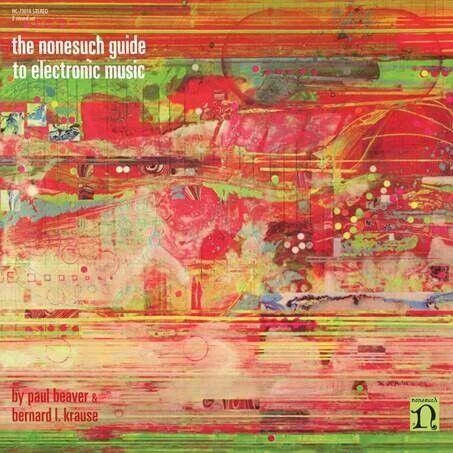
Produced by: Paul Beaver & Bernard L Krause
50th Anniversary Edition now mastered at the correct pitch for the first time as approved by Bernie Krause 2017
Recorded in 1968
Re-mastering by: Ray Staff at Air Mastering, Lyndhurst Hall, London
LINER NOTES FOR BEAVER & KRAUSES THE NONESUCH GUIDE TO ELECTRONIC MUSIC By Richie Unterberger
Among the very first to master and popularize the sounds of the Moog synthesizer were Paul Beaver and Bernie Krause. Their debut album, The Nonesuch Guide to Electronic Music, was something of a primer for the sounds the instrument could make. Though largely devoted to demonstrations of specific sounds, it ended up making far more of an impact than the usual instructional record did, enjoying healthy sales and helping to spread the use of the synthesizer within the music industry.
Beaver and Krause were introduced to each other by Elektra records founder and president Jac Holzman, who was looking to use the synthesizer in an astrological concept album the company was producing, The Zodiac Cosmic Sounds. They were in some respects an unlikely pair. It was while sitting together with Krause on a plane ride to the Monterey Pop Festival, in fact, that Holzman conceived of the idea for The Nonesuch Guide to Electronic Music.
We felt that any number of companies represented possibilities, responds Krause today when asked whether Elektra was felt to be a natural home for the duos first album. But Jac, at the time, seemed to express the levels of creative energy, imagination, and interest unmatched at that moment by any of the other A&R reps.
Adds Bernie, Neither Jac or us had a clue what we were doing and what the potential market was, although Jac apparently had a gut instinct about it. Paul or I certainly werent thinking in those terms. Our objective was to get the information out there about synthesis of sound and new definitions of music that resulted from its introduction (i. e. music = control of sound). The information wasnt solely contained on the vinyl. The double LP was accompanied by a scrupulously notated 16-page booklet, described as a syllabus in the introduction, that Krause wrote to detail signal generators, voltage control, modulating, filtering, synthesis of sound, and studio equipments role in the recording and live performance of electronic music.
As for how the sounds on the album were selected and recorded, We went through each module on the Moog, one by one, and explained the functions inherent in each. The sounds themselves were selected from the four possible outputs of the oscillators (sine, triangular, continuously variable rectangular, and sawtooth). From these, either individually or in combination, we selected and used the sounds as examples. The only challenge of Moog synthesizers at the time was the relative instability of the oscillators, which tended to drift in pitch. So we constantly had to retune the machine. Otherwise, no problem.
Most of the two-disc sets four sides were brief, less-than-a-minute tracks sonically illustrating numerous examples of electronic sound, subdivided into sections documenting signal generators, control generators, frequency modulation, amplitude modulation, ring modulation, amplitude modulation, ring modulation, filtering, and tape delay. Even with the numerous individual tracks, and the many bands of silence separating them, the albums running time is on the short side for a double LP. Krause confirms this was done to help ensure that the sonic range of the sound was as full as possible, as longer vinyl LP sides tended to cut down on that quality when they were mastered. We and the mastering folks were not sure how the more robust signals of the synthesizer would affect the limits of track width and depth, so we purposely kept it on the short side, he elaborates. Also, this was the first release to use Dolby noise reduction during the recording process. And finally, it wasnt a listening type of album.
As recording artists, Beaver and Krause would continue to develop their pioneering sounds in unexpected ways over the next few years.
Richie Unterberger


Reviews
There are no reviews yet.